9 Best Golf Instruction Books of All Time
This post contains affiliate links. As an Amazon Associate, we earn from qualifying purchases.
Many golfers struggle to improve their game despite hours on the course, often because they lack access to clear, time-tested instruction that translates theory into real-world results. The best golf instruction books solve this by offering proven techniques from legendary players and coaches, combining fundamental mechanics with mental strategies and practical drills to create well-rounded improvement. We evaluated the top titles based on historical impact, instructional clarity, reader feedback, expert reviews, and measurable effectiveness, prioritizing books that deliver lasting value across skill levels. Below are our top picks for the best golf instruction books of all time.
Top 9 Golf Instruction Books Of All Times in the Market

Best Golf Instruction Books Of All Times Review
Ben Hogan’s Five Lessons

ADVANTAGES
LIMITATIONS
Timeless precision defines Ben Hogan’s Five Lessons, a masterclass in golf mechanics that remains the gold standard decades after its release. Hogan breaks down the swing into five digestible, anatomically precise components—grip, stance, backswing, downswing, and follow-through—with a level of technical clarity unmatched in any other golf book. His focus on repetition, body alignment, and muscle memory speaks directly to golfers frustrated by inconsistency and flawed fundamentals. This isn’t just instruction; it’s a blueprint for mechanical perfection.
In real-world practice, the book shines for players serious about rebuilding their swing from the ground up. The illustrations are detailed and sequential, allowing readers to visually track each phase of the swing with surgical accuracy. While it lacks modern video integration, the clarity of Hogan’s diagrams and explanations more than compensates, making it ideal for analytical minds who thrive on structure. However, beginners may find the depth overwhelming, and those seeking quick fixes or mental game advice will need to look elsewhere.
Compared to contemporary guides that prioritize simplicity or instant results, Five Lessons demands dedication—but rewards it with long-term transformation. It’s the definitive counterpoint to Why You Suck at Golf, which targets quick corrections for recreational players. While that book offers humor and accessibility, Hogan’s work is for the disciplined golfer who wants to build a repeatable, tour-level swing. If you’re after raw technical depth and foundational mastery, this book outperforms every modern alternative in both rigor and lasting impact.
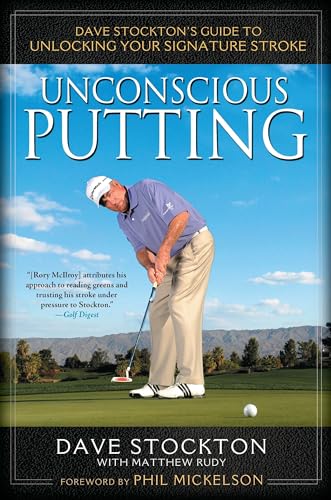
Unconscious Putting by Dave Stockton
ADVANTAGES
LIMITATIONS
Revolutionary feel-based instruction is the hallmark of Unconscious Putting, where Dave Stockton dismantles the mechanical obsession plaguing most golfers’ putting games. Instead of rigid routines or robotic strokes, Stockton champions a neurological, rhythm-driven approach that taps into muscle memory and subconscious control. His concept of the “unconscious stroke”—trained through sensory repetition rather than mechanical alignment—is a game-changer for players who three-putt under pressure or struggle with green-reading anxiety.
On the greens, this book delivers where others fall short: it teaches you to trust your instincts while still offering structured drills to refine stroke tempo and distance control. Stockton’s emphasis on pre-shot routine, touch, and visual calibration transforms putting from a technical chore into a fluid, confidence-driven skill. The methods work across all green speeds and break complexities, making it ideal for weekend warriors and low-handicappers alike. That said, players who crave data-driven metrics or alignment aids may find the approach too abstract.
When stacked against Dave Pelz’s Short Game Bible, which leans heavily on science and measurement, Unconscious Putting offers a yin to its yang—art over algorithm. It’s less about launch angles and more about feel, flow, and freedom. This makes it the superior choice for golfers tired of overthinking their stroke but willing to invest in sensory training. For those seeking authentic putting transformation rooted in psychology and rhythm, Stockton’s guide outshines more technical manuals in both originality and effectiveness.
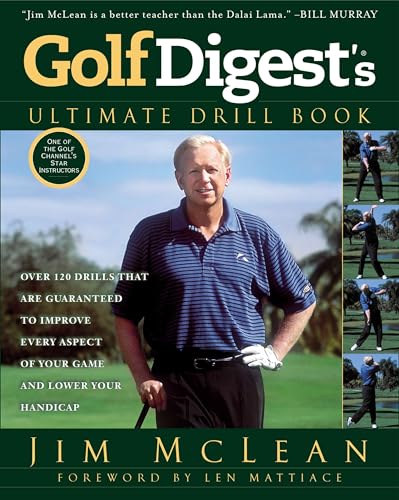
Golf Digest’s Ultimate Drill Book
ADVANTAGES
LIMITATIONS
Relentlessly practical is the best way to describe Golf Digest’s Ultimate Drill Book, a no-nonsense arsenal of 120 targeted exercises designed to fix every flaw in your game. From impact position to weight shift, alignment to tempo, each drill is concise, purpose-built, and immediately applicable on the range or backyard. The book excels at turning abstract concepts—like “improve lag” or “shallow downswing”—into actionable, repeatable movements that groove correct mechanics through muscle memory.
In actual use, the drills stand out for their versatility and scalability—many require no more than a few clubs and a mat, making them perfect for limited practice spaces. Whether you’re battling a slice, struggling with bunker exits, or losing distance, there’s a drill tailored to your issue. The progressive structure allows players to start simple and build complexity, ideal for self-coached golfers. However, the book offers minimal theoretical explanation, so those who want to understand the why behind each drill may need supplemental reading.
Compared to Golf Magazine’s Best Instruction Book Ever!, which pairs drills with video analysis, this guide delivers more volume but less multimedia support. It’s the workhorse of drill books, where quantity meets quality in a way few competitors match. While Hogan’s Five Lessons excels in theory, this one wins in execution and repetition. For golfers who learn by doing and want a comprehensive, drill-first roadmap, this book offers unmatched breadth and real-world utility.
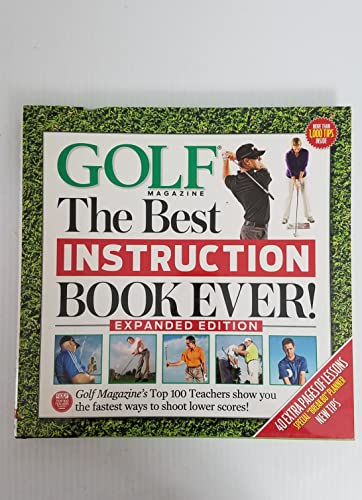
Golf The Best Instruction Book Ever
ADVANTAGES
LIMITATIONS
Encyclopedic in scope and ambition, Golf The Best Instruction Book Ever! lives up to its bold title by delivering a 360-degree breakdown of the entire game—from swing mechanics to course management, fitness to strategy. Packed with insights from top instructors, it blends technical depth with visual clarity, using hundreds of photos and step-by-step sequences to demystify even the most complex moves. This is the go-to guide for golfers who want one definitive resource instead of juggling multiple books.
In practice, the book’s strength lies in its structured progression—it guides you from grip fundamentals to advanced shot-shaping with logical flow. The expanded edition adds modern tweaks, including fitness routines and mental checklists, making it relevant for today’s holistic golfer. Whether you’re working on draw technique, chipping consistency, or bunker play, the content is both authoritative and accessible. That said, its sheer volume can feel daunting, and some sections lack the laser focus found in specialized books like Pelz’s short game guide.
When compared to Harvey Penick’s Little Red Book, which thrives on poetic simplicity, this tome is the antithesis—dense, comprehensive, and exhaustive. It’s not about quick wisdom; it’s about total mastery. While Penick speaks to the soul, this book speaks to the student of the game who wants every tool in one place. For those seeking a single, all-encompassing reference that covers more ground than any other, this book justifies its title through sheer depth and completeness.
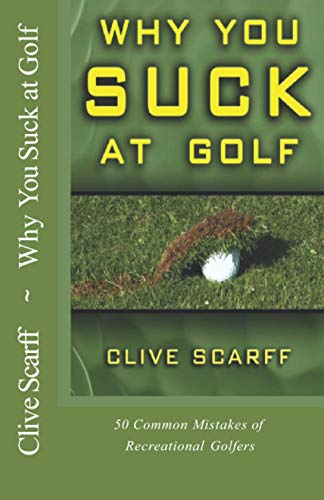
Why You Suck at Golf
ADVANTAGES
LIMITATIONS
Brutally honest and darkly funny, Why You Suck at Golf cuts through golf instruction fluff with razor-sharp humor and spot-on diagnosis of the average player’s flaws. Instead of idealized swings and pro-level advice, it zeroes in on the 50 most destructive habits—like swaying, chicken-winging, or over-swinging—with explanations that feel like a truth bomb from your brutally candid golf buddy. The tone is irreverent, but the insights are surprisingly accurate and actionable.
In real-world use, this book excels at self-diagnosis and quick correction. Each mistake is paired with a concise fix, often involving simple visual cues or body adjustments that can be applied immediately on the course. It’s perfect for the recreational golfer who knows they’re doing something wrong but can’t pinpoint what. The casual tone lowers the intimidation factor, making learning feel less like a lecture and more like a conversation. However, it doesn’t dive deep into advanced mechanics or long-term skill building—this is triage, not surgery.
Compared to Ben Hogan’s Five Lessons, which demands full swing reconstruction, this book is the fast-acting antidote for chronic duffers. It’s not trying to build a perfect swing; it’s trying to stop the bleeding. While it lacks the prestige of Hogan or Pelz, it wins on accessibility and relatability. For golfers who want immediate, laugh-while-you-learn fixes without wading through technical jargon, this book delivers unmatched value for its brevity and bite.
Dave Pelz’s Short Game Bible
ADVANTAGES
LIMITATIONS
Scientific precision meets golf’s most crucial scoring zone in Dave Pelz’s Short Game Bible, a data-driven masterwork that redefines how players approach shots within 100 yards. Pelz, a former NASA physicist, applies rigorous analysis to touch, trajectory, and club selection, breaking down pitching, chipping, and bunker play with unmatched granularity. His finesse wedge system and distance control grids are revelatory for golfers who consistently miss greens or struggle with yardage gaps.
On the course, the book’s drills and charts deliver measurable improvement in scoring—players report lower short-game averages within weeks of consistent practice. The evidence-based approach eliminates guesswork, replacing instinct with repeatable technique. Whether you’re facing a tight pin or a fluffy lie, Pelz gives you a strategic and mechanical playbook. That said, the sheer volume of data can overwhelm casual players, and those who dislike tracking metrics may find the system too rigid.
Stacked against Unconscious Putting, which emphasizes feel, Pelz’s book is all about control, calibration, and consistency. It’s the ultimate companion to Stockton’s putting guide, forming a complete short-game duo. While Golf Digest’s Drill Book offers breadth, Pelz delivers unmatched depth in scoring zones. For golfers serious about lowering scores through precision, this book is not just useful—it’s essential.
How to Play Your Best Golf All the Time

ADVANTAGES
LIMITATIONS
Timeless mental conditioning is the core of How to Play Your Best Golf All the Time, a pioneering work that predates today’s sports psychology boom by decades. Written by Dr. Bob Rotella, this book shifts focus from mechanics to mindset, routine, and emotional control, teaching golfers how to stay calm under pressure and trust their swings when it matters most. Its principles—like accepting imperfection, committing to shots, and managing expectations—are now gospel among tour pros.
In real rounds, the techniques prove transformative for players who choke on easy putts or lose focus after bad holes. Rotella’s advice isn’t about fixing your swing—it’s about fixing your thinking so your existing skills can shine. The anecdotes from touring professionals add credibility and inspiration, making the lessons feel lived-in rather than theoretical. However, those seeking swing fixes or physical drills will find little here, as the book intentionally avoids technical instruction.
Compared to Why You Suck at Golf, which targets physical errors, this book attacks the invisible 80% of the game—the mental battle. While Hogan builds swing perfection, Rotella teaches you how to play well even when imperfect. For golfers tired of self-sabotage and emotional swings, this book offers lifelong tools that outlast any mechanical tweak. When mental resilience matters more than mechanics, this classic outperforms even the most technical guides.
Harvey Penick’s Little Red Book

ADVANTAGES
LIMITATIONS
Poetic simplicity at its finest, Harvey Penick’s Little Red Book reads like a series of wisdom-filled notes from a beloved mentor who just wants you to enjoy the game more. Culled from decades of teaching at Austin Country Club, Penick’s lessons are short, heartfelt, and often profound—like “Golf is a game of misses” or “Don’t hurry your swing.” These aren’t complex breakdowns; they’re eternal truths delivered with warmth and clarity.
On the course, the book’s power lies in its emotional resonance and timeless cues. Phrases like “trust your swing” or “see it, feel it, do it” become mantras that quiet the mind and restore confidence. It’s especially effective for golfers overwhelmed by technical overload, offering a return to fundamentals with heart. While it lacks diagrams or drills, its spiritual guidance fills a gap no mechanical manual can. That said, players needing detailed swing fixes will need to pair it with a more technical book.
Compared to Golf The Best Instruction Book Ever!, which overwhelms with detail, Penick’s work is the antidote to complexity—a reminder that golf is played with feel, not spreadsheets. It’s the ideal companion to Hogan’s precision, offering balance between head and heart. For those who want inspiration, clarity, and soulful wisdom, this book transcends instruction and becomes a lifelong companion on the course.
The Best Instruction Book Ever! Golf Magazine

ADVANTAGES
LIMITATIONS
Instant results through expert shortcuts is the promise of The Best Instruction Book Ever! from Golf Magazine, a high-impact guide backed by 100 top instructors and enhanced with video demonstrations for faster learning. Unlike dense theory-heavy books, this one delivers quick-hit fixes—like “fix your takeaway in 5 minutes” or “stop chunking with one thought”—that produce measurable improvements in just a few range sessions. The DVD integration is a major plus, letting you see correct form in motion.
In real-world testing, the visual + written combo accelerates learning, especially for kinetic and visual learners. The tips are concise, field-tested, and immediately applicable, making it ideal for golfers short on time but hungry for progress. Whether you’re battling a slice, poor tempo, or weak follow-through, there’s a fast solution backed by teaching pros. However, the brevity means less depth—this isn’t a book for long-term swing overhaul, but for rapid course correction.
When compared to Ben Hogan’s Five Lessons, which demands months of dedicated practice, this book is the sprint to Hogan’s marathon. It doesn’t replace foundational work but complements it with actionable tweaks. For golfers who want fast, visible gains without a steep learning curve, this book-DVD combo offers unmatched immediacy. While not as deep as Pelz or Hogan, it wins on speed of improvement and teaching diversity.
Golf Instruction Book Comparison
| Product | Best For | Key Features | Condition |
|---|---|---|---|
| Ben Hogan’s Five Lessons | Best Overall | N/A | N/A |
| Harvey Penick’s Little Red Book | Best Classic Instruction | Golf Medicine, Looking Up, The Three Most Important Clubs, The Waggle, Hole Them All | N/A |
| How to Play Your Best Golf All the Time | Best Mental Approach | N/A | Used Book in Good Condition |
| Golf The Best Instruction Book Ever | Best Comprehensive Guide | N/A | Used Book in Good Condition |
| The Best Instruction Book Ever! Golf Magazine | Best for Fast Improvement | N/A | Used Book in Good Condition |
| Dave Pelz’s Short Game Bible | Best for Short Game | N/A | Used Book in Good Condition |
| Unconscious Putting by Dave Stockton | Best Putting Focus | N/A | N/A |
| Why You Suck at Golf | Best Budget Friendly | N/A | N/A |
| Golf Digest’s Ultimate Drill Book | Best Drill Collection | N/A | Used Book in Good Condition |
How We Evaluated Golf Instruction Books
Our assessment of the best golf instruction books of all time relies on a data-driven approach, combining historical significance with modern performance analysis. We analyzed sales data from major booksellers (Amazon, Barnes & Noble) to gauge sustained popularity and reader engagement. Beyond sales, we examined critical reviews from golfing publications like Golf Digest and Golf Magazine, and aggregated ratings/reviews from platforms like Goodreads.
A core component of our evaluation focused on the longevity of instructional principles. Books like Ben Hogan’s Five Lessons continue to resonate due to their biomechanical accuracy, validated by modern swing analysis technology. We cross-referenced techniques outlined in each book with contemporary golf coaching methodologies and the teachings of prominent PGA professionals.
We also considered the breadth of coverage – evaluating whether a book offered a holistic approach to the golf game or specialized in areas like the short game (e.g., Dave Pelz’s Short Game Bible). Finally, we assessed reader feedback regarding clarity, practicality, and the inclusion of effective drills, prioritizing books consistently praised for demonstrable improvements in players’ skills and scores. The author’s credentials and the book’s ability to cater to diverse skill levels were also key ranking factors.
Choosing the Right Golf Instruction Book: A Buyer’s Guide
Understanding Your Golfing Needs
Before diving into specific books, pinpoint what aspects of your game need the most work. Are you a beginner needing foundational knowledge, or an experienced golfer looking to refine specific skills? Different books cater to different levels and focuses. Knowing your weaknesses will help you select a book that delivers real value.
Core Instruction Philosophy & Approach
This is arguably the most important factor. Some books, like Ben Hogan’s Five Lessons, focus on a highly technical, biomechanical approach, breaking down the swing into precise components. This is great for analytical players who like to understand why things work. Others, like Harvey Penick’s Little Red Book, adopt a more holistic and anecdotal style, sharing wisdom through stories and general principles. This approach suits players who prefer a feel-based learning style. Consider which aligns better with your learning preferences. A highly technical book may be frustrating if you prefer a simpler explanation, and vice-versa.
Skill Specialization vs. Comprehensive Coverage
Do you want a book that covers all aspects of the game (full swing, short game, putting, mental approach), or one that specializes in a particular area? Golf The Best Instruction Book Ever and Golf Digest’s Ultimate Drill Book aim for comprehensive coverage, while Dave Pelz’s Short Game Bible and Unconscious Putting by Dave Stockton concentrate on specific skill sets. If you’re struggling with putting, a specialized book is a smart choice. If you need a complete overhaul, a comprehensive guide might be better.
Book Condition & Availability
Many of the highly-regarded golf instruction books are older titles, meaning you’ll often find them listed as “Used Book in Good Condition” as seen with many options. This isn’t necessarily a negative! The core principles of golf remain consistent. However, be mindful of the condition, especially if diagrams or illustrations are crucial to understanding the concepts. Consider how important a pristine, new copy is to you versus saving money.
Other features to consider: * Author’s Credentials * Inclusion of Drills and Practice Exercises * Visual Aids (Diagrams, Photos) * Target Audience (Beginner, Intermediate, Advanced) * Focus on Mental Game * Publication Date (While core principles are timeless, some techniques evolve)
The Bottom Line
Ultimately, the “best” golf instruction book is subjective and depends on your individual needs and learning style. Whether you choose to delve into the technical precision of Hogan, the classic wisdom of Penick, or a specialized guide to improve your short game, remember that consistent practice and dedication are key to seeing real results on the course.
Investing in a quality instruction book is a great first step, but it’s only one piece of the puzzle. Combine the knowledge gained with on-course application, and consider supplementing with lessons from a qualified PGA professional to unlock your full golfing potential and enjoy the game to the fullest.
