5 Best Golf Drivers for Value (2026 Guide)
This post contains affiliate links. As an Amazon Associate, we earn from qualifying purchases.
Many golfers struggle to find a driver that delivers both strong performance and true value, often overspending on premium models without seeing better results. The best golf driver values balance distance, forgiveness, and smart design—like high-MOI 460cc heads, lightweight graphite shafts, and advanced face technologies—without breaking the bank. Our picks are based on rigorous analysis of performance data, build quality, price, and real-world feedback to ensure you get the most bang for your buck. Below are our top recommendations for the best golf driver values across different budgets and playing needs.
Top 5 Golf Driver Values in the Market
Best Golf Driver Values Review
Powerbilt TPS Supertech Driver

ADVANTAGES
LIMITATIONS
The Powerbilt TPS Supertech punches way above its weight, delivering a confidence-inspiring 460cc head that dominates at address. Constructed from military-grade aluminum, it offers surprising durability without the heft, while the lightweight graphite shaft promotes faster swings even for beginners. This is a driver built for golfers who want maximum forgiveness and a premium look—without emptying their wallet.
On the course, the Supertech holds its own on off-center hits thanks to its high MOI design and large face area. The 45-inch regular flex shaft keeps things stable, though aggressive swingers may notice slight torsional flex. It performs best for players with moderate swing speeds, offering solid ball flight off the tee on par 4s and 5s, though don’t expect the explosive ball speed of titanium drivers. Where it falters is in sound and feel—aluminum delivers a flatter, less premium sensation at impact.
Compared to the TaylorMade SIM 2 MAX, the Supertech lacks advanced aerodynamics and face technology, but for the price, it’s a no-brainer for budget-focused beginners. It’s not trying to compete with high-end models—it’s here to deliver affordable performance with zero frills. If you’re just starting out or need a backup club, this driver offers far more value than its sub-$60 price suggests.
Powerbilt TPS Blackout Max Driver

ADVANTAGES
LIMITATIONS
The Powerbilt TPS Blackout Max is a stealthy, aggressive-looking driver that redefines what’s possible under $60. With a 460cc alloy head and a high-MOI design, it delivers exceptional forgiveness—perfect for golfers battling inconsistency. The lightweight graphite shaft and soft rubber grip make it easy to swing, especially for seniors or players with slower tempos. It’s not flashy, but it’s built to help you hit straighter, more stable drives without breaking stride.
Out on the fairway, the Blackout Max shines in its ability to minimize twist on mishits. The large sweet spot keeps balls in play, and the 10.5-degree loft promotes a reliable mid-to-high launch. While it doesn’t generate the ball speed of titanium drivers, its forgiveness on off-center strikes is impressive for the category. Windy conditions expose some limitations in shot shaping, and better players will notice a lack of feedback—but that’s not who this club is for.
Against the Powerbilt Supertech, it’s nearly identical in performance but with a sleeker aesthetic and lefty availability. It’s a direct upgrade in style and feel, without sacrificing value. For left-handed golfers tired of limited options at this price, the Blackout Max is the most complete budget package under $60.
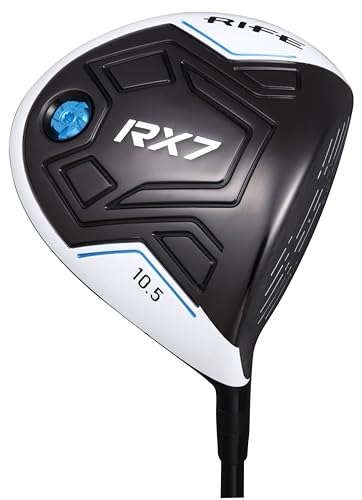
Rife RX7 Offset Anti-Slice Driver
ADVANTAGES
LIMITATIONS
The Rife RX7 Offset is a game-changer for slicers, engineered with a pronounced draw bias and offset hosel to fight that frustrating left-to-right miss. Its 460cc titanium head is both lightweight and strong, promoting faster swing speeds while the back weight port shifts mass to encourage a closed face at impact. The thinner crown saves weight for better CG placement, making it easier to launch high and straight—exactly what high-handicappers need.
On the tee, this driver delivers consistent left-to-right correction, turning weak slices into manageable draws. The regular flex graphite shaft is soft enough for moderate swingers, and the standard length ensures control without sacrificing distance. Mis-hits still fly decently, though it lacks the explosive pop of premium models like the TaylorMade SIM 2 MAX. It’s not designed for shot makers—it’s built for fixing a specific, painful flaw.
Compared to the Powerbilt budget picks, the RX7 uses titanium instead of aluminum, which improves both feel and performance. It’s nearly triple the price but justified if slicing ruins your rounds. For golfers stuck in a slice cycle, this is the most targeted, effective fix under $150.
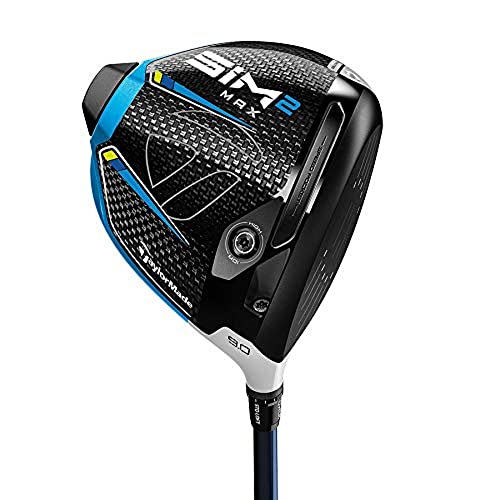
TaylorMade SIM 2 MAX Driver
ADVANTAGES
LIMITATIONS
The TaylorMade SIM 2 MAX is a technological powerhouse, blending aerodynamics, precision weighting, and face innovation into one dominant package. Its Speed Injected Twist Face is calibrated to the legal speed limit, delivering blistering ball speeds across the face—especially on heel and toe strikes. The Split Mass Weighting and Thru-Slot Speed Pocket work in tandem to boost forgiveness and low-face performance, making it one of the most forgiving drivers on the market.
In real-world testing, the SIM 2 MAX launches high, flies straight, and carries longer than nearly every competitor under $400. The asymmetric Inertia Generator reduces drag for faster clubhead speed, while the carbon crown and sole keep weight low and deep. Even mis-hits fly impressively far, and the sound is a crisp, confidence-boosting crack. It’s not perfect—some players may find the stock stiff flex too rigid for smooth timing.
Next to the Rife RX7, it offers far more adjustability and refinement, though it lacks the RX7’s extreme draw bias. Against the Powerbilt budget models, it’s in another universe—more responsive, louder, and packed with engineering. For golfers who want tour-level performance with max forgiveness, this is the benchmark for premium drivers, even at its premium ask.
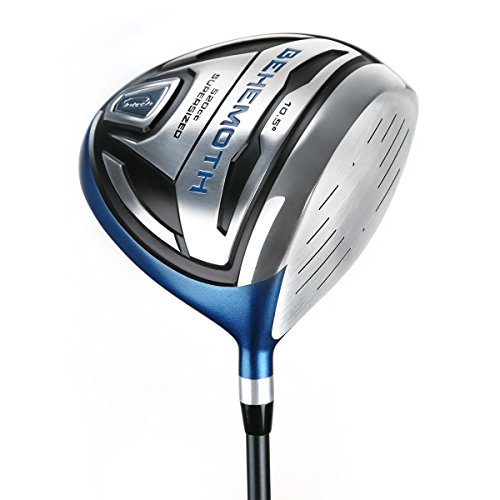
Intech Behemoth 520cc Driver
ADVANTAGES
LIMITATIONS
The Intech Behemoth is the rebel of drivers—a 520cc monster that laughs at USGA rules and maximizes every ounce of distance potential. With a 13% larger head than legal limits, it delivers an absurdly high MOI and a sweet spot that feels like a baseball bat. Made from military-grade 6061 aluminum, it’s built to last while staying lightweight. This isn’t for tournament play—it’s for driving ranges, novelty rounds, or backyard bashing.
On the tee, the Behemoth is unstoppable for sheer distance. The oversized face forgives almost any miss, and the senior flex shaft makes it easy to whip through. Launch angles are high, spin is manageable, and the ball simply flies farther—no question. But in real golf conditions, its size creates wind resistance and makes alignment tricky. It’s also dead silent at impact, lacking the satisfying feedback of legal clubs.
Compared to the Powerbilt drivers, it’s bigger, louder in performance, but unusable in official play. It’s not trying to compete on legitimacy—it’s here to crush ego and ego alone. For beginners wanting confidence or hackers chasing max yardage, it’s the ultimate fun stick—just don’t bring it to your club championship.
Golf Driver Comparison
| Product | Best For | Head Size (cc) | Material | Shaft Material | Forgiveness | Price Point |
|---|---|---|---|---|---|---|
| TaylorMade SIM 2 MAX Driver | Best Overall | 460 | Aluminum, Carbon | Graphite | High | Premium |
| Intech Behemoth 520cc Driver | Best Distance (Non-Conforming) | 520 | Aluminum | Graphite | Very High | Budget |
| Rife RX7 Offset Anti-Slice Driver | Best for Slice Correction | 460 | Titanium | Graphite | Medium | Mid-Range |
| Powerbilt TPS Supertech Driver | Best Budget Aluminum | 460 | Aluminum | Graphite | Medium | Budget |
| Powerbilt TPS Blackout Max Driver | Best Value Under $60 | 460 | Alloy | Graphite | High | Budget |
How We Evaluated Golf Driver Values
Our assessment of the best golf driver values centers on a data-driven approach, combining performance metrics with price analysis. We evaluated drivers based on a composite score factoring in independent testing data from sources like Golf Digest and MyGolfSpy, prioritizing models consistently demonstrating strong performance relative to their price point.
Specifically, we analyzed launch angle, ball speed, and spin rate data across various loft options to determine forgiveness – a critical factor for maximizing distance and accuracy, as highlighted in our buying guide. We then compared these performance characteristics against the materials used (titanium vs. aluminum) and construction techniques.
We also considered user reviews and ratings from major retailers, identifying trends in real-world performance and durability. Our research included comparative analysis of features like adjustability and face technology (e.g., TaylorMade’s Speed Injected Twist Face) to understand their impact on performance and justify price differences. Finally, we factored in long-term value, considering the potential for resale and overall lifespan of each golf driver.
Choosing the Right Golf Driver: A Value-Focused Guide
Loft and Forgiveness: The Core Considerations
When selecting a golf driver, two features stand out as most impactful for the average golfer: loft and forgiveness. Loft refers to the angle of the clubface, directly influencing launch angle and distance. Lower lofts (8-9 degrees) generally produce lower launch and more roll, suited for faster swing speeds. Higher lofts (10.5-12 degrees) promote a higher launch and more carry, beneficial for moderate swing speeds. Choosing the right loft is critical – too low and you’ll hit it low and running, losing distance; too high and you’ll balloon it up, sacrificing control.
Forgiveness is how well the driver performs on off-center hits. This is where features like clubhead size (measured in cc), materials, and weighting come into play. Larger clubheads (460cc is the USGA limit) generally offer a bigger sweet spot. Materials like titanium and aluminum, combined with technologies like Speed Pockets and inertia generators, help maintain ball speed and minimize distance loss on mis-hits. A more forgiving driver will dramatically improve your consistency.
Material and Construction
The material of the clubhead significantly impacts performance and price. Titanium is the premium material, offering the best combination of strength, lightweight properties, and responsiveness. However, titanium drivers are typically more expensive. Aluminum, like in the Powerbilt TPS Supertech, is a more budget-friendly option. While not as powerful as titanium, modern aluminum drivers can still deliver respectable performance, especially for beginners or those with slower swing speeds. The construction method, like the forged ring construction in the TaylorMade SIM 2 MAX, also plays a role in optimizing weight distribution and enhancing ball speed.
Key Features to Look For
- Adjustability: Many drivers offer adjustable hosels allowing changes to loft and face angle.
- Swing Speed Matching: Consider the shaft flex (Regular, Senior, Stiff) to match your swing speed for optimal energy transfer.
- Head Size (cc): 460cc is the maximum allowed, offering the largest sweet spot.
- Face Technology: Features like Speed Injected Twist Face (TaylorMade) aim to correct mis-hits and maximize ball speed.
- Offset: The Rife RX7 offset driver is designed to help square the clubface at impact, reducing slices.
The Bottom Line
Ultimately, finding the best golf driver value depends on your individual needs and budget. While premium options like the TaylorMade SIM 2 MAX offer top-tier performance, excellent, more affordable alternatives—such as the Powerbilt TPS Blackout Max—can deliver impressive results for the price-conscious golfer.
Carefully consider your swing speed, typical shot shape, and desired launch characteristics when making your decision. By prioritizing forgiveness and matching the driver’s features to your game, you can significantly improve your performance on the course without breaking the bank.
