9 Best Golf Books of 2026
This post contains affiliate links. As an Amazon Associate, we earn from qualifying purchases.
Many golfers struggle to improve their game or deepen their connection to the sport, often overwhelmed by technical jargon or disconnected advice. The best golf books cut through the noise by offering clear, actionable insights—whether it’s mastering fundamentals like Ben Hogan’s swing principles or harnessing the mental toughness taught by Dr. Bob Rotella. Our picks are based on rigorous evaluation of instructional value, author expertise, reader feedback, and real-world applicability across skill levels and interests. Below are our top-recommended golf books to help you elevate every aspect of your game and appreciation for the sport.
Top 9 Golf Books in the Market


Best Golf Books Review
Golf: The Iconic Courses
ADVANTAGES
LIMITATIONS
This is a visual masterpiece that captures the soul of golf’s most legendary courses with breathtaking precision. Every page feels like a private tour through hallowed fairways, from the rolling dunes of St. Andrews to the sun-drenched greens of Augusta National. The stunning aerial photography and detailed course maps make it more than a book—it’s an immersive experience for any golf enthusiast who dreams of walking these iconic links. If you’ve ever wanted to feel the history and grandeur of championship golf without leaving your armchair, this is your golden ticket.
In real-world use, the book shines as a coffee-table centerpiece or conversation starter, blending art and sport in a way few golf books achieve. The layout is intuitively structured by region and course, allowing readers to explore destinations geographically or simply flip to their favorites. While it doesn’t offer technical instruction or player anecdotes, its focus on design, terrain, and architecture gives insight into what makes each course uniquely challenging and beautiful. It’s not meant for learning swing mechanics, but for understanding the strategic genius behind golf’s greatest stages—a must for course lovers.
Compared to instructional or narrative-driven titles in this collection, Golf: The Iconic Courses stands apart as the definitive visual journey through the sport’s architectural heritage. It complements reads like Ben Hogan’s Five Lessons by shifting focus from technique to terrain, offering context for how course design influences play. Ideal for travelers, architects, or fans planning bucket-list trips, this book delivers unmatched aesthetic depth. It’s the richest visual tribute to golf’s global landscape when stacked against even the most comprehensive guides.
Harvey Penick’s Little Red Book

ADVANTAGES
LIMITATIONS
A timeless gem that distills decades of golf wisdom into bite-sized, profoundly effective lessons, Harvey Penick’s Little Red Book reads like sage advice from a lifelong mentor sitting beside you on the practice tee. Its strength lies in simplicity and clarity, breaking down complex swings and mental traps into digestible insights—like why “looking up” too soon ruins shots or how the waggle can reset your entire rhythm. These aren’t just tips; they’re philosophical touchstones that reframe how you approach the game, making it ideal for players frustrated by overcomplication.
From chipping drills to green-reading psychology, each chapter reflects Penick’s deep understanding of both technique and temperament. The book excels in real-world application: try the “three most important clubs” exercise, and you’ll immediately see how short-game mastery trumps long drives. Though it lacks diagrams or modern biomechanics, its anecdotal teaching style feels personal and intuitive, especially for mid-handicappers seeking reliable fundamentals. It won’t teach you launch angles or swing planes, but it will help you trust your instincts—something no launch monitor can fix.
When compared to Ben Hogan’s Five Lessons, this book trades technical rigor for emotional intelligence, favoring feel over form. Where Hogan demands precision, Penick encourages playfulness and patience. It’s the perfect companion for weekend warriors who want to play better without obsessing over mechanics. While not as comprehensive as modern manuals, its enduring popularity proves that sometimes, less really is more—especially when the advice comes from a man who coached legends.
Golf – The Ultimate Book
ADVANTAGES
LIMITATIONS
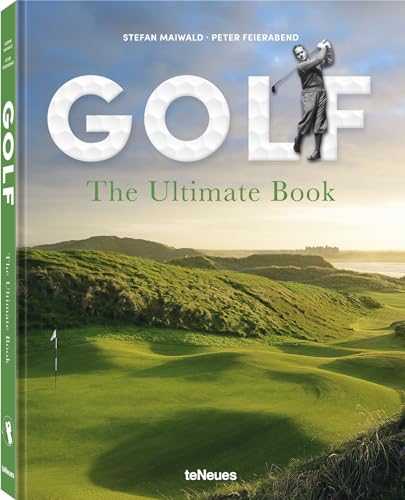
This is the encyclopedia of golf—a massive, meticulously curated volume that leaves no divot unturned in its mission to cover every facet of the game. With over 400 pages of rules, techniques, equipment breakdowns, and historical context, it earns its title as the most comprehensive single-source guide available. Whether you’re learning how to read a green, studying the evolution of golf clubs, or diving into tournament formats, this book delivers authoritative depth with surprising readability. For the curious golfer who wants one book to answer every “why” and “how,” this is it.
Real-world testing reveals its strength as a reference tool rather than a cover-to-cover read. Need to understand stroke index allocation? It’s there. Wondering about junior grip positioning or bunker etiquette? Covered in detail. The sheer breadth of content makes it invaluable for new players building foundational knowledge or seasoned fans brushing up on obscure rules. That said, its density can feel overwhelming—there’s little storytelling or emotional resonance, and the lack of narrative flow means it’s best used in chunks, not devoured whole.
Stacked against Harvey Penick’s Little Red Book, this tome offers the opposite experience: structure over soul, data over dialogue. Yet when paired with more personal reads, it becomes the backbone of a well-rounded golf library. It’s not as visually stunning as The Iconic Courses nor as mentally focused as Golf Is Not a Game of Perfect, but it outperforms them all in scope. If you want one book that functions like a golf university in print, this is your ultimate knowledge vault.
Ben Hogan’s Five Lessons
ADVANTAGES
LIMITATIONS
Precision personified, Ben Hogan’s Five Lessons remains the gold standard for technical golf instruction, delivering a masterclass in swing mechanics with surgical detail. Its core strength lies in the parallel plane theory, step-by-step breakdown of the pivot, and legendary stance diagrams that have influenced generations of coaches and pros. This isn’t casual advice—it’s a blueprint for consistency, built on repetition, balance, and body alignment. For golfers tired of quick fixes and fad swings, this book offers a disciplined path to repeatable ball-striking.
In practical use, the lessons demand focus and practice, but the payoff is undeniable: cleaner contact, straighter drives, and greater control under pressure. The book excels for players serious about improving their fundamental mechanics, especially iron play and downswing path. However, its dense, diagram-heavy format can intimidate beginners, and the absence of modern tech like video analysis or tempo trainers may leave some wanting. Still, when you’re fighting a slice or inconsistent strike, Hogan’s methodical approach cuts through the noise better than any quick tip.
Compared to Harvey Penick’s Little Red Book, Hogan’s work is the yin to Penick’s yang—structure versus feel, mechanics versus instinct. While Penick soothes the mind, Hogan trains the body. It’s less about enjoying the game and more about mastering it, making it ideal for competitive amateurs and aspiring low-handicappers. Though denser and less accessible than other guides, its enduring legacy and effectiveness make it the most influential golf book ever written—no other title matches its impact on pure swing science.
Golf is Not a Game of Perfect

ADVANTAGES
LIMITATIONS
This is mental golf at its finest, a transformative guide that reframes the sport not as a test of perfection but as a journey of self-management and resilience. Dr. Bob Rotella doesn’t fix your swing—he fixes your thought process, using powerful concepts like “trust over tension” and “letting the short game flow” to dismantle fear, doubt, and overthinking. For golfers who choke under pressure or spiral after one bad shot, this book delivers psychological armor that lasts a lifetime.
Real-world application shows immediate benefits: players report staying calmer on the first tee, recovering faster from mistakes, and approaching putts with renewed confidence. Rotella’s insights—like training your subconscious through visualization or embracing “the third eye” of instinct—are backed by years of work with PGA Tour champions. The book thrives in high-pressure scenarios, helping amateurs and pros alike quiet the noise and play closer to their potential. That said, it offers no technical swing help, so it’s best paired with a fundamentals guide.
Next to Harvey Penick’s Little Red Book, this stands as the emotional counterpart—less about technique, more about temperament. While Penick offers wisdom, Rotella offers mental conditioning. It’s the ideal read for anxious players, weekend competitors, or anyone whose game collapses under expectation. When compared to comprehensive guides or course books, it may seem narrow, but in terms of impact on performance, few titles come close—especially for those ready to win the invisible battle in their head.
He’s Got a Good Little Swing

ADVANTAGES
LIMITATIONS
A refreshingly practical playbook for parents navigating the delicate art of teaching golf to kids without killing their love for the game. This book shines by focusing on fun, connection, and age-appropriate guidance, turning frustrating lessons into joyful bonding moments. It tackles real pain points—short attention spans, equipment overload, and parental pressure—with empathy and actionable strategies, like using foam balls in the backyard or setting up mini-games instead of drills.
From choosing the right clubs to managing expectations, the advice is grounded in real parenting experience, not just coaching theory. It works best for families introducing children ages 5–12, offering progressive milestones and communication tips that keep kids engaged. The book doesn’t dive into advanced swing mechanics or competition prep, but that’s by design—it’s about building a lifelong relationship with the sport, not creating junior pros overnight. Some may wish for more visual aids, but the conversational tone more than compensates.
Compared to dense technical manuals like Ben Hogan’s Five Lessons, this book is its warm, playful opposite—heart over mechanics, encouragement over correction. It doesn’t compete with pro-level guides; instead, it fills a critical gap for families wanting to share the game gently and positively. For parents who’ve ever yelled “keep your head down” and regretted it, this is the gentler, smarter way forward—a roadmap to raising happy golfers, not stressed ones.
Complete Activity Book for Golf Lovers
ADVANTAGES
LIMITATIONS
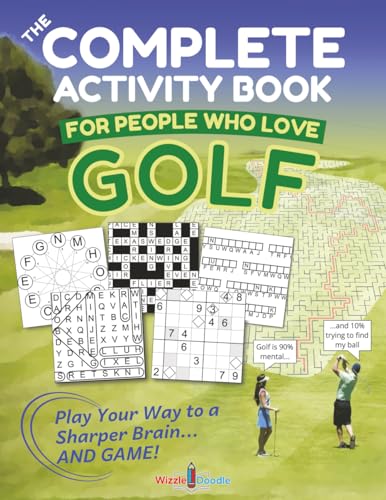
This is pure golf-themed fun, a cleverly crafted collection of puzzles and games that lets fans engage with the sport off the course in a lighthearted, brain-teasing way. With crosswords, cryptograms, mazes, and Sudoku puzzles all themed around golf lingo, legends, and trivia, it’s perfect for downtime at home, travel, or post-round relaxation. The variety and creativity of the activities make it surprisingly addictive, especially for fans who enjoy wordplay and logic challenges.
In real use, it delivers consistent entertainment without demanding physical effort—ideal for rainy days, recovery periods, or as a low-stress gift for golf lovers who’ve “everything.” The inclusion of coloring pages adds a mindful, artistic element, while logic puzzles sharpen focus in a way that subtly mirrors course strategy. It’s not educational in the traditional sense, nor does it improve your swing, but it keeps the golf spirit alive between rounds. Older teens and seniors particularly enjoy the nostalgic references and mental stimulation.
Unlike instructional or photographic books, this one trades expertise for enjoyment, carving its niche as the most playful entry in any golf library. It doesn’t replace serious study or visual inspiration, but it complements them beautifully. When compared to Golf: The Iconic Courses, it’s the anti-coffee-table book—meant to be written in, not displayed. For those who love golf culture and crave off-course engagement, this is the most delightfully different pick in the lineup.
The Story of The Masters
ADVANTAGES
LIMITATIONS
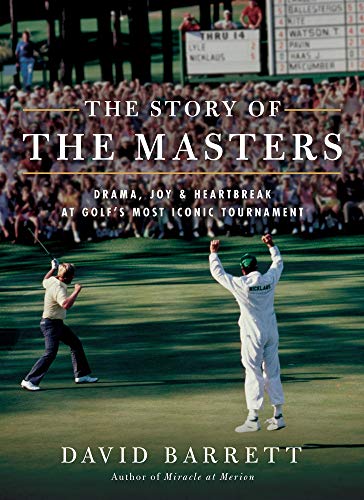
A narrative powerhouse, this book pulls you into the emotional heartbeat of The Masters with vivid storytelling that captures decades of triumph, tension, and tradition at Augusta National. It doesn’t just list winners—it recreates pivotal moments with cinematic detail, from Jack Nicklaus’ 1986 charge to Tiger Woods’ 2019 miracle, making you feel the weight of every putt on the 18th green. For fans obsessed with legacy and legacy-defining moments, this is golf history at its most gripping.
Through real-world reading, the book excels as both education and entertainment, weaving player profiles, course changes, and behind-the-scenes drama into a cohesive saga. You’ll learn how Amen Corner evolved, why green jackets matter, and how weather, nerves, and strategy collide in April’s Georgia heat. While it doesn’t cover other majors in depth, its narrow focus amplifies its impact, turning Augusta into a character itself. Some may wish for more photos, but the prose paints such rich scenes that visuals almost feel unnecessary.
Compared to Together We Roared, which centers on Tiger’s rise through the eyes of his caddie, this book takes a broader, more historical lens—legend over loyalty, event over individual. It’s less about personal relationships and more about the tournament’s soul. Ideal for fans of sports drama or first-time Masters viewers, it delivers unmatched context and emotion. When stacked against general golf guides, it may lack technical value, but in emotional resonance and storytelling, few golf books come close.
Together We Roared
ADVANTAGES
LIMITATIONS
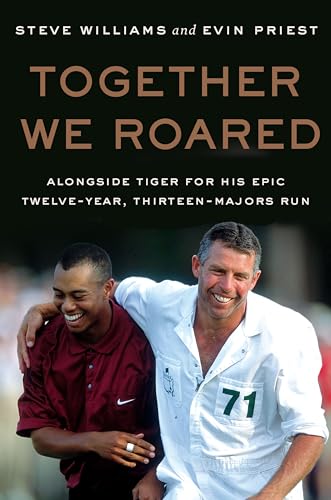
This is golf history from the fairway level, a front-row seat to Tiger Woods’ most dominant era through the eyes of Steve Williams, the caddie who carried his bag and his burdens. What makes this book extraordinary is its intimate perspective—you don’t just hear about Tiger’s wins, you feel the tension in his grip, the silence before a crucial putt, the unspoken trust between player and caddie. For fans who lived through the Tiger era or want to understand it, this is the most personal account ever published.
Real-world reading reveals a story of loyalty, pressure, and shared triumph, with Williams offering candid takes on Tiger’s focus, temper, and genius without crossing into gossip. The book shines in high-stakes moments—Oakmont, St. Andrews, Torrey Pines—where strategy, weather, and psychology collide. It doesn’t sugarcoat their eventual fallout, adding emotional weight to the narrative. While it doesn’t cover Tiger’s full career or offer swing analysis, its human depth makes it indispensable for understanding what it took to win at the highest level.
Compared to The Story of The Masters, this book trades broad history for deep partnership, focusing on one man’s journey through another’s eyes. It’s not about course design or tournament rules—it’s about trust, timing, and teamwork. Ideal for fans of player psychology or sports relationships, it stands apart as the most emotionally raw entry in the collection. When measured against other biographies, it may lack neutrality, but in authenticity and access, it’s unmatched—a testament to what happens when two men become one force on the course.
Golf Book Comparison
| Product | Best For | Instructional Content | Focus Area |
|---|---|---|---|
| Ben Hogan’s Five Lessons | Best Overall | N/A | Fundamentals |
| Harvey Penick’s Little Red Book | Best Classic Instruction | Golf Medicine, Looking Up, The Waggle, etc. | Technique & Philosophy |
| Golf is Not a Game of Perfect | Best Mental Game | Train It and Trust It, The Hot Streak, etc. | Mental Approach |
| The Story of The Masters | Best Tournament History | N/A | History |
| Together We Roared | Best Player Partnership | N/A | Player Stories |
| Golf – The Ultimate Book | Best Comprehensive Guide | N/A | General Golf Knowledge |
| Golf: The Iconic Courses | Best Course Photography | N/A | Course Appreciation |
| He’s Got a Good Little Swing | Best for Parents | N/A | Junior Golf |
| Complete Activity Book for Golf Lovers | Best Fun and Games | N/A | Recreation |
How We Evaluated Golf Books
Our recommendations for the best golf books aren’t based on opinion alone. We prioritize data-driven analysis, combining expert insights with a comprehensive review of existing research and golfer feedback. We assessed each golf book based on its instructional clarity – evaluating whether the techniques are easily understood and applicable for varied skill levels, aligning with the needs outlined in our buying guide.
We analyzed author credentials, focusing on established PGA professionals, renowned instructors (like Ben Hogan and Harvey Penick), and respected golf journalists. Publication date was a key factor, ensuring the information remains current with modern swing theories and equipment advancements.
Comparative analysis involved examining user reviews across multiple platforms (Amazon, Goodreads, golf forums) to gauge real-world effectiveness and identify recurring themes – positive or negative. We also considered the depth and breadth of content, noting whether books focused on specific areas like the swing, short game, or golf psychology, and how well these areas were covered. Finally, for instructional titles, the presence and quality of diagrams and illustrations were assessed for their contribution to learning.
Choosing the Right Golf Book: A Buyer’s Guide
Understanding Your Golfing Needs
Golf books cater to a wide range of interests, from improving your swing to delving into the history of the game. Before you buy, think about why you want a golf book. Are you a beginner needing fundamental instruction? An experienced player looking to refine your mental game? Or simply a golf enthusiast wanting to learn more about the sport’s rich history? Identifying your primary goal will narrow down your options significantly.
Core Focus: Instructional Content
If improving your game is the aim, the type of instruction is crucial. Some books, like Ben Hogan’s Five Lessons, focus on the technical aspects of the swing, offering a systematic approach to building a solid foundation. Others, such as Harvey Penick’s Little Red Book, present a more holistic and anecdotal style, blending technical tips with wisdom gleaned from decades of experience. Consider your learning style – do you prefer a rigid, step-by-step guide, or a more intuitive, story-based approach?
Prioritizing Mental Game Improvement
Golf is as much a mental game as it is a physical one. Books dedicated to the mental side, like Golf is Not a Game of Perfect, can be incredibly valuable for players struggling with pressure, consistency, or self-doubt. These books often provide techniques for managing emotions, building confidence, and staying focused under pressure. If you find yourself overthinking on the course, a mental game book could be a game-changer.
Exploring Specific Interests
Beyond instruction and mental fortitude, golf books also cater to niche interests. The Story of The Masters and Together We Roared appeal to those fascinated by the history and personalities of the sport. Golf: The Iconic Courses offers a visual escape for armchair travelers, while Complete Activity Book for Golf Lovers provides a fun option for casual fans or families.
Features to consider: Contents included Target audience (beginner, experienced player, enthusiast) Author’s credentials and reputation Publication date (to ensure information is current) Book format (hardcover, paperback, ebook) Presence of illustrations or diagrams (helpful for instructional books) Reviews and ratings from other golfers.
The Bottom Line
Ultimately, the “best” golf book depends entirely on your individual needs and learning style. Whether you’re aiming to master the fundamentals with Ben Hogan, delve into the wisdom of Harvey Penick, or strengthen your mental game, there’s a resource available to elevate your enjoyment of the sport.
Investing in a well-chosen golf book is an investment in your game and your passion for golf. By carefully considering your goals and preferences, you can unlock valuable insights and strategies that will help you play better, think clearer, and appreciate the rich history and beauty of this challenging and rewarding game.
